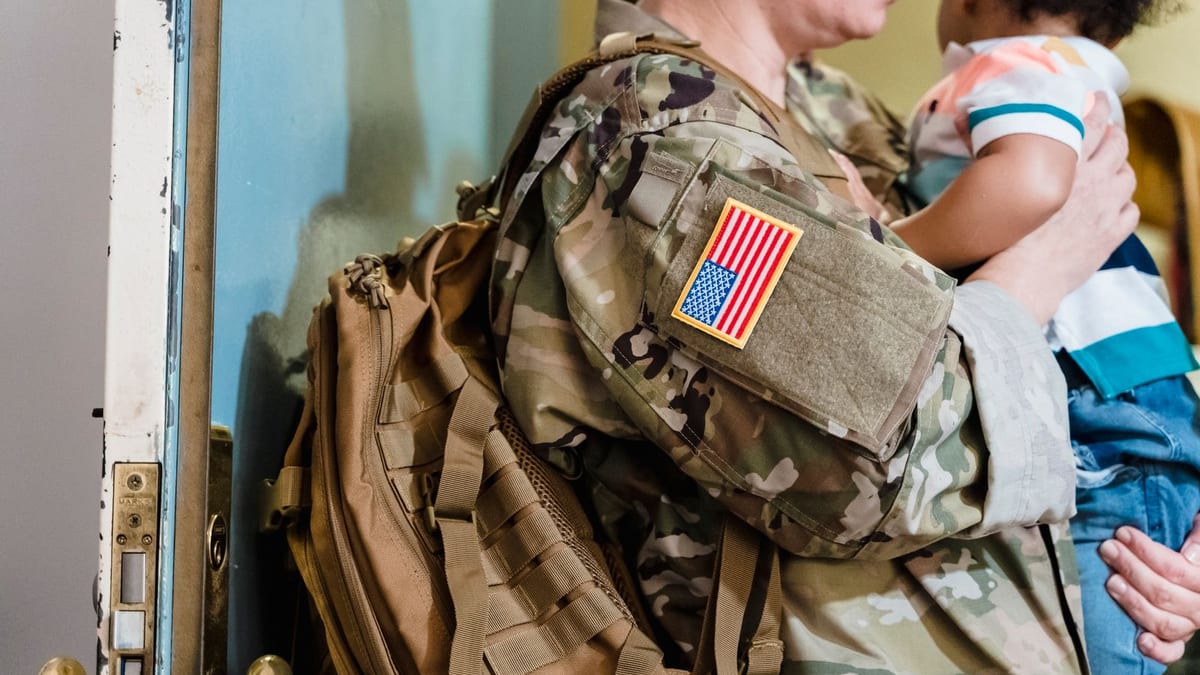
Photo courtesy of Adobe Stock
How to Restore VA Pensions and Disability Payments After Prison
The U.S. Department of Veterans Affairs (VA) is one of the largest federal agencies in the nation. With an annual budget exceeding $300 billion and more than 450,000 employees nationwide, it serves between 16 and 18 million living U.S. veterans. Nearly nine million rely on VA health care, while millions receive disability compensation, education benefits, pensions, and housing assistance.
Yet within that population is a frequently overlooked group: justice-involved veterans serving time in jail or prison.
Veterans Behind Bars: A Disproportionate Reality
According to the Bureau of Justice Statistics, more than 107,000 veterans were incarcerated in state or federal prisons in the most recent comprehensive survey. At the time, veterans represented roughly 8 percent of state prisoners and 6 percent of federal inmates.
This, while veterans make up only about 3 percent of the overall U.S. population. That means incarcerated veterans are disproportionately represented in the criminal justice system. Most veterans do not engage in criminal behavior. According to one study, Veterans with substance abuse problems combined with post-traumatic stress disorder (PTSD) have a 61 percent higher chance of arrest or criminal justice involvement than those without PTSD. Throw anger management problems into the mix, and you have a toxic combination that leads to violence, arrest, and imprisonment. For these veterans, one urgent question arises: What happens to VA benefits during incarceration?
The 60-Day Rule: How Incarceration Affects VA Disability and Pension Benefits
Federal law governs how VA disability compensation and VA pension benefits are adjusted when a veteran is incarcerated following a felony conviction. The key provision is commonly known as the “60-day rule.”
VA Disability Compensation
If a veteran is convicted of a felony and incarcerated for more than 60 days:
- Veterans rated 20 percent or higher are reduced to the 10 percent disability rate.
- Veterans rated 10 percent receive half of their normal payment.
The reduction begins on the 61st day of imprisonment.
These reductions generally do not apply to veterans participating in work-release programs, halfway houses, or certain community control arrangements. Upon release, VA disability benefits can be reinstated
VA Pension Benefits
Unlike disability compensation, VA pension payments stop entirely on day 61 of incarceration. Payments may resume after release, provided eligibility requirements are still met. To reinstate benefits, the incarcerated veteran, a family member, or legal representative must notify the VA using VA Form 21-4193, “Notice to Department of Veterans Affairs of Veteran or Beneficiary Incarcerated in Penal Institution.” Failure to notify the VA can result in overpayments, suspension of benefits, and collection actions. (See below for a step-by-step process to restore VA benefits.)
Payments to Dependents
In some cases, withheld benefits may be apportioned to a spouse or dependent children while the veteran is incarcerated. The VA notifies the veteran of this option and explains how payments resume upon release.
Education Benefits
Veterans assigned to halfway houses or work-release programs may continue receiving full monthly VA education benefits. Those who are fully incarcerated may receive limited reimbursement for tuition, fees, books, and supplies.
Restoring VA Disability Benefits After Release from Incarceration
Restoring VA benefits after incarceration requires deliberate action, and timing matters.
Step 1: Notify the VA Immediately
Veterans should notify the VA approximately 30 days before release or immediately upon release, and provide official documentation, such as parole papers or a release certificate.
To receive back pay retroactive to the release date, notification must be made within 1 year of the release date. Veterans can locate the appropriate Regional Office using the VA Office Locator tool.
Step 2: Complete VA Form 21-4193
VA Form 21-4193 provides the VA with both incarceration and release information necessary to reinstate full payments. Submitting the form with release documentation reduces administrative delays and protects eligibility.
Step 3: Using the template below, submit a letter requesting reinstatement of VA Benefits
Sample Letter Requesting Reinstatement of VA Benefits
Date:
Department of Veterans Affairs
[Complete address from the VA Office Locator Tool linked above]
Subject: Request for Reinstatement of Disability Compensation Following Release from Incarceration
I am writing to formally notify the Department of Veterans Affairs that I was released from incarceration on [release date] from [name of correctional institution].
My VA disability compensation benefits were reduced due to incarceration. I request reinstatement of my full disability compensation benefits, effective as of my release date, in accordance with VA regulations.
Enclosed please find:
- VA Form 21-4193 (Notice to VA of Veteran or Beneficiary Incarcerated in Penal Institution)
- Official documentation verifying my release date
- [Any additional supporting documents, if applicable]
[If the applicable] I am submitting this notification within one year of my release and request payment of any retroactive compensation to which I am entitled from my release date.
If additional information is required, please notify me in writing at the address listed above. I request written confirmation once my benefits have been reinstated.
Respectfully,
[Signature]
[Printed Name]
[Full Return Address]
A 90-Day Reentry Plan for Justice-Involved Veterans
The following framework synthesizes guidance from VA reentry programs, federal homelessness prevention initiatives, and veteran-focused service organizations. The goal is simple: reduce homelessness, relapse, and recidivism during the first 90 days after release. (See one example study of another group of prisoners at the NIH National Library of Medicine.)
The bottom line is that reentry does not fail for lack of motivation. It fails when instability compounds. Anyone who has worked with veterans knows that the first few months after release from prison can set the trajectory and tone for what follows. Basic needs, housing, health care, income, and healthy peer connections, either fall into place or they do not. When they do not, relapse and recidivism follow.
Here is a practical 90-day veteran transition plan built around the foregoing reality and tailored specifically for veterans returning to incarceration:
Weeks 1 to 2: Secure the Basics
Confirm reinstatement of VA disability compensation or pension payments. Apply for housing support through the HUD-VASH program if needed. Obtain a valid state ID and secure a reliable mailing address. Without income, identification, and housing, everything else stalls.
Weeks 3 to 6: Restore Health and Income
Schedule VA primary care and mental health appointments. Reconnect with a Veterans Service Officer (VSO). Begin a structured job search or vocational training program. Address any overpayment issues with the VA to prevent future financial setbacks.
Weeks 7 to 12: Build Stability
Develop a realistic monthly budget. Secure longer-term housing. Continue medical care or counseling. Begin saving, even modestly. Stability grows through routine and structure.
The first 90 days are not about solving every problem. They are about preventing collapse. Housing and healthcare come first. Income follows. Long-term rebuilding grows from that foundation.
Key Resources for Veterans After Incarceration
Vet Centers
Community-based Vet Centers provide confidential counseling and reintegration support separate from traditional VA hospital settings.
HUD-VASH Housing Support
As mentioned previously, the HUD-VASH program is a great resource for seeking affordable housing. The program combines rental vouchers with VA case management. Veterans typically pay 30 percent of their income toward rent, with the voucher covering the remainder. Stable housing is one of the strongest predictors of reduced recidivism.
VA Homeless Programs
The VA operates the nation’s largest integrated network of services for at-risk veterans through its VA homeless programs. Services include transitional housing, case management, mental health care, and employment assistance. (Note: As of this writing, the VA website was undergoing reconstruction. Eventually, users will be redirected to the redesigned webpages.)
National Coalition for Homeless Veterans
The National Coalition for Homeless Veterans advocates for housing stability and expanded services to prevent and end veteran homelessness nationwide.
Veterans Deserve a Second Chance
Every April is nationally recognized as Second Chance Month. It is a reminder that rebuilding after incarceration is possible with structure, support, and access to earned benefits. For veterans, that second chance carries particular meaning. They have already served their country and deserve the help and resources of a grateful nation.
Imprisonment can interrupt VA pension and benefit payments. Restoring those benefits requires complying with VA rules. Our mission at Clearway is to provide members with access to vetted resources to help them secure their second chance. For veterans, reentry is not about erasing the past. It is about restoring stability, housing, healthcare, and VA benefits. When those foundations are secured early, recidivism declines and lives regain direction. With sustained public commitment and properly funded veteran reentry programs, honoring service also means supporting renewal.
Did this story speak to you? Pass it on.
Someone you know might need to read this today.